Self-initiated concept
Liminal Form
A 3D form study asking when an object stops feeling solid, using topology, transparency, and wireframe states to sit between matter and data.
- Scope
- Concept development, form design, material and interaction prototype
- Duration
- Four-week concept sprint
- Tools / Methods
- Blender · Three.js · Material studies
- Year
- 2026
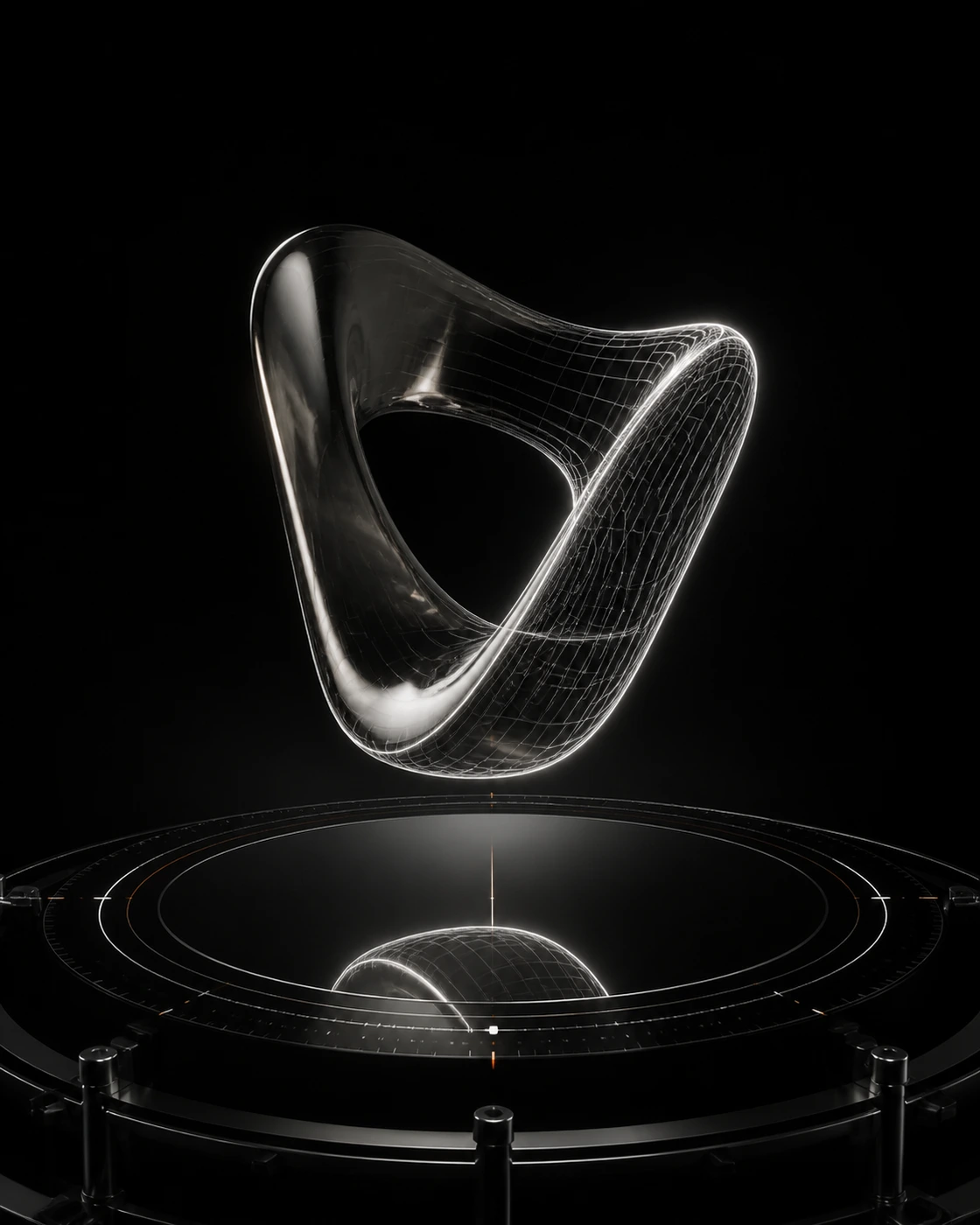
If an object behaves like glass, wireframe, and light at once, is it still a solid object?
Core inquiry
Turning uncertainty into form rules
The project did not begin with a familiar object. It began with three constraints: the silhouette must be memorable, no angle can become a definitive front, and material state must alter the perceived weight. These rules turned ‘indeterminate’ from an adjective into a testable geometry problem.
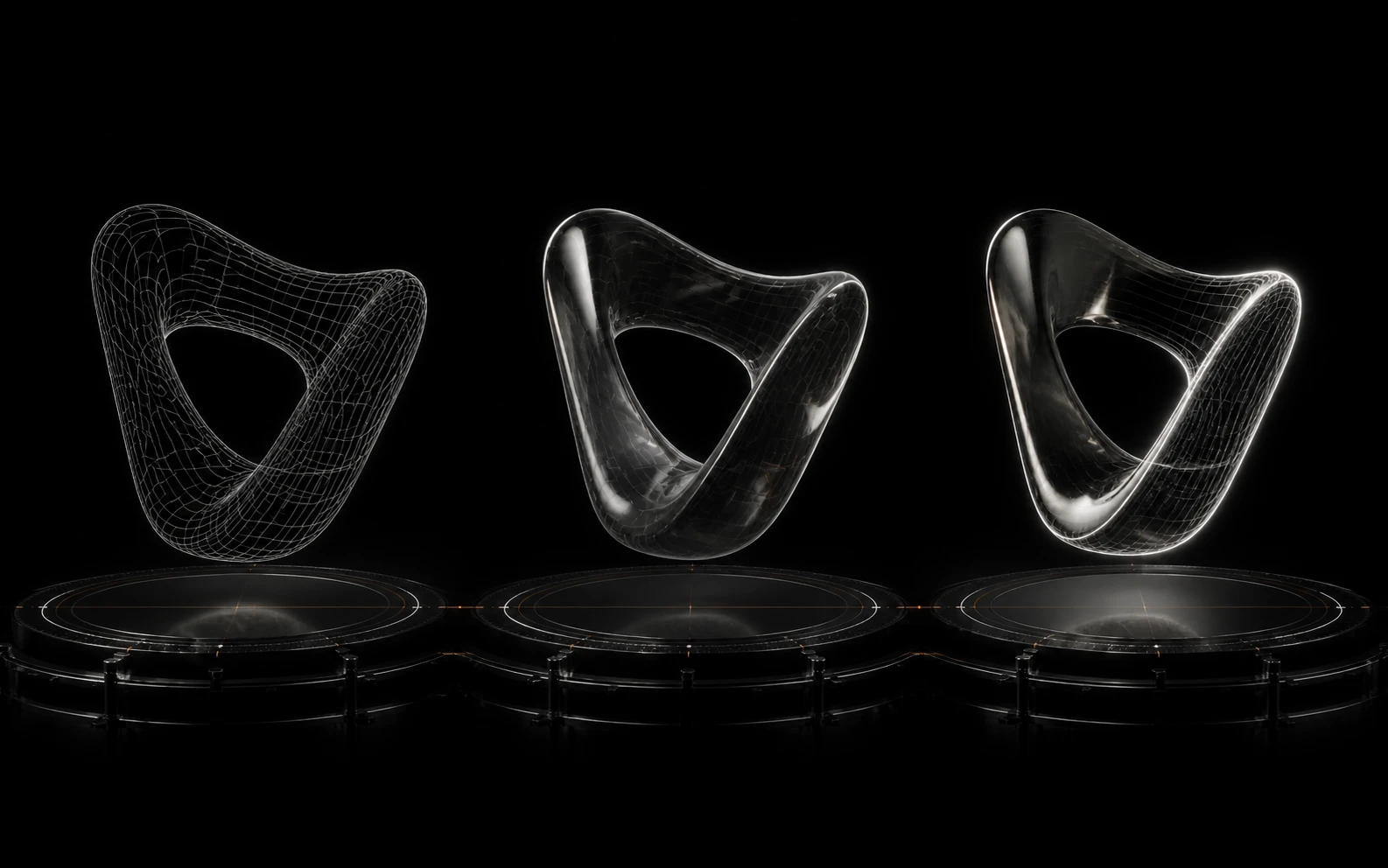
From silhouette to an operable prototype
- 01
Silhouette
Remove the front
Continuous torsion keeps every viewpoint viable instead of optimizing one camera angle.
- 02
Topology
Control tension flow
Edge density preserves detail at high curvature while keeping calmer areas clean.
- 03
Material
Make weight variable
Switching between wireframe, clear, and smoked glass tests the same form’s psychological weight.
- 04
Interaction
Hand viewing to the user
Drag rotation and material switching let people test the relationship themselves.
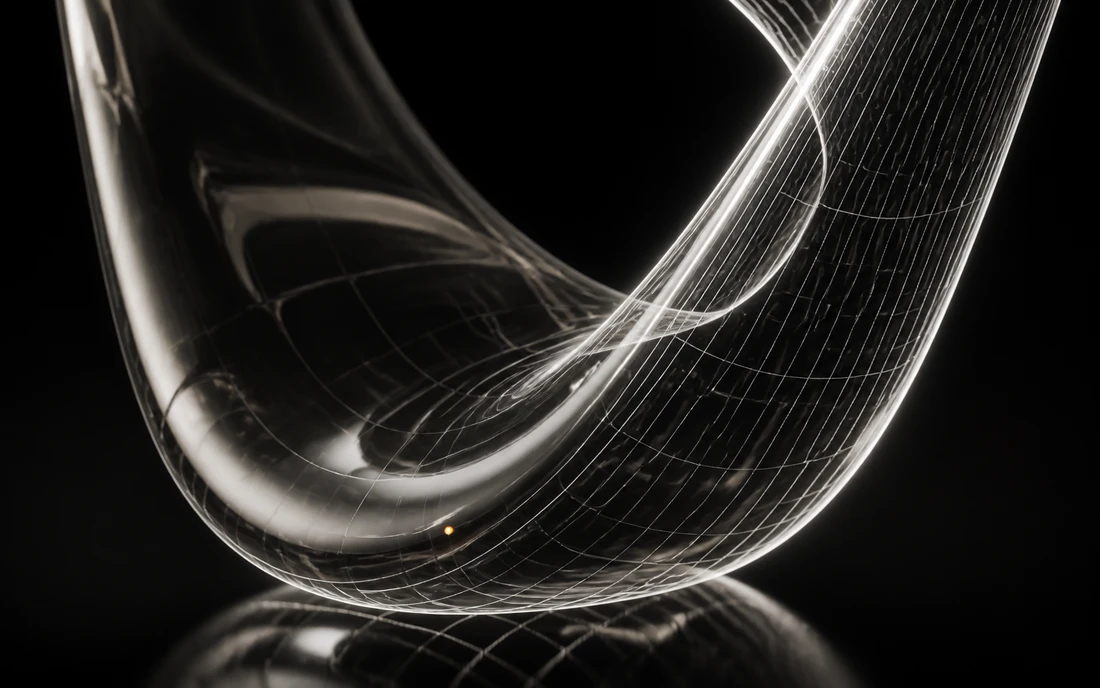
Let material work without spectacle
Light is confined to edges and contact surfaces, while orange behaves only as a measurement mark. Transparency, reflection, and wireframe can each do a clear job without falling into generic sci-fi spectacle.
What the prototype clarified
The strongest identity came not from the most complex topology, but from the tension between apparent softness and structural stability. Later iterations removed secondary bumps, retained three major turns, and reduced the interaction to rotation and material state.
Drag the form and switch wireframe/material states in a lightweight web extension of the concept.
Try the 3D pocket machine